There's a moment many auction operators recognize. You've been running your platform for a while. Business is growing. And somewhere along the way, you start hitting walls. Not because you're doing something wrong, but because the software you're using was designed for someone else's business.
You've outgrown generic auction software. Or you're building something that doesn't exist yet. Either way, the standard SaaS path isn't the right one anymore.
This is what the other path looks like.
It Starts Before We Build Anything
The most common mistake in custom software development is starting with a features list. You describe what you think you need; a developer builds it; and six months later you're living with decisions that made sense on paper but don't match how your business actually operates.
We don't work that way.
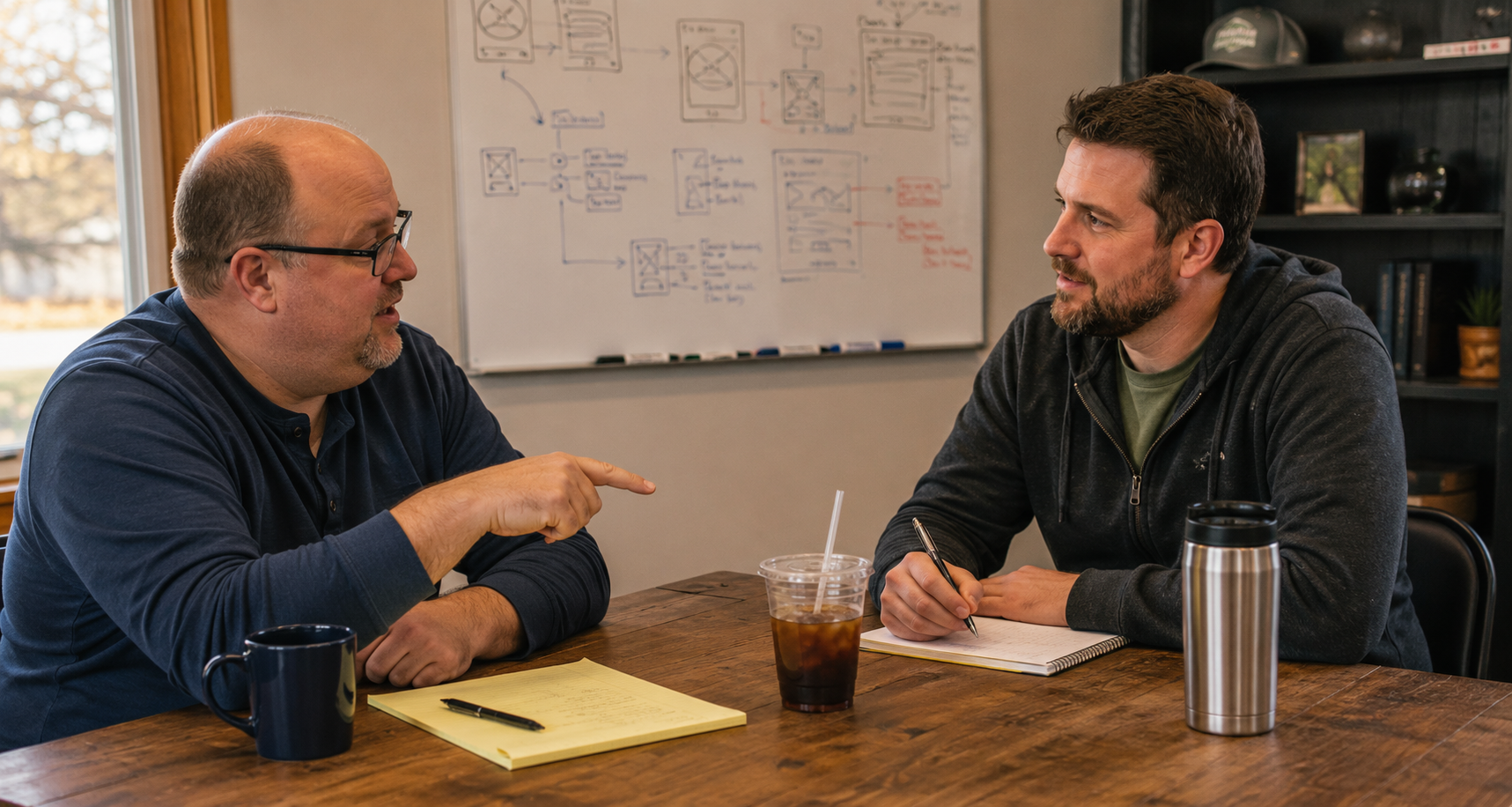
For clients pursuing a truly custom platform, we start with a structured Discovery Engagement — dedicated time spent with every functional area of your operation. Inventory acquisition. Cataloging. Marketing. Auction operations. Customer service. Payments. Checkout and logistics.
We ask questions. We watch how your people actually work. We document what we find. Depending on the complexity of your business, this might be a week on-site with your team or an extended remote engagement over several weeks.
We don't arrive with answers. We arrive with a framework for finding them together.
What comes out of discovery is something most software projects never have: a clear, detailed picture of your actual needs — not assumptions about them. Everything built after that is built to reality, not to a spec written in a conference room.
Your Project. Your History. Your Platform.
Every client we work with on a custom build gets their own dedicated project workspace. Feature requests, bug reports, change history, development roadmap — all of it tracked entirely separately from every other client we work with.
There's no shared backlog where your priorities compete with someone else's. There's no generic queue where requests disappear.
When work gets done, it's logged to your project. When something breaks and we fix it, that fix is part of your record. When you submit a request, you can see exactly where it stands at every stage of development.
This matters more than it sounds. Clients who have been with us for years have a complete, traceable record of every decision ever made on their platform. That institutional memory belongs to the relationship — and to you.
How We Handle Requests (No Surprises)
You don't send an email and hope for the best.
Every request enters a formal workflow: intake, estimation, development, QA, pre-deployment review, production. For smaller, clearly scoped requests — typically four hours or fewer — we move forward without waiting for an approval step. For anything larger, we give you an estimate before we start. You always know what something will take before we take it on.
For urgent issues — something broken on a live auction — those get triaged immediately, separate from the feature queue. Priority 1 items affecting live bidding or payment processing move to the front, full stop.
The Work Is Real Work
This is worth saying plainly: we build actual custom software. Real code changes. Database migrations. Server configurations. Payment gateway integrations. Custom UI implementations.
A recent international launch is a good example of what this looks like — a vehicle auction platform we built from the ground up for a new market. Standing it up required regional server infrastructure to meet local data requirements, migration of an existing bidder database, full payment processor integration, custom registration flows, outbid notification systems via email and SMS, and dozens of UX refinements right up to launch day. Every item was tracked, estimated, tested through QA, and deployed to production through a structured process.
That's not an unusually complex project. That's what a new platform build looks like.
What Long-Term Actually Means
The most interesting thing about our best client relationships is that they get more interesting after launch.
Once you're live, you start learning things you couldn't have known in advance. Your bidders tell you what's confusing. Your staff finds friction in the admin tools. You want to try new auction formats. You need to integrate a new payment processor or add bidder notifications you hadn't thought of before.
We're built for exactly that.
Long-term clients submit work continuously — a mix of small improvements, medium-sized features, and occasional larger projects. We prioritize and execute on a rolling basis. One farmland auction platform we've supported through well over a hundred iterations is running a platform today that looks substantially different from what launched. It's been shaped by years of real use.
That's not a byproduct of the relationship. It's the point of it.
Is Custom Solutions Right for You?
AuctionMethod's standard SaaS platform is genuinely powerful — a full-featured bidding engine, configurable auction settings, bidder registration and management, payment processing, email and SMS notifications, and a self-service admin interface. Most independent auctioneers are live within days and never need anything more.
Custom Solutions is the right conversation when:
- Your operation has workflows, requirements, or a bidder experience the standard platform can't accommodate
- You're building a marketplace, a branded destination, or a platform that needs to feel entirely like yours
- You have enterprise-scale requirements around data, integrations, infrastructure, or compliance
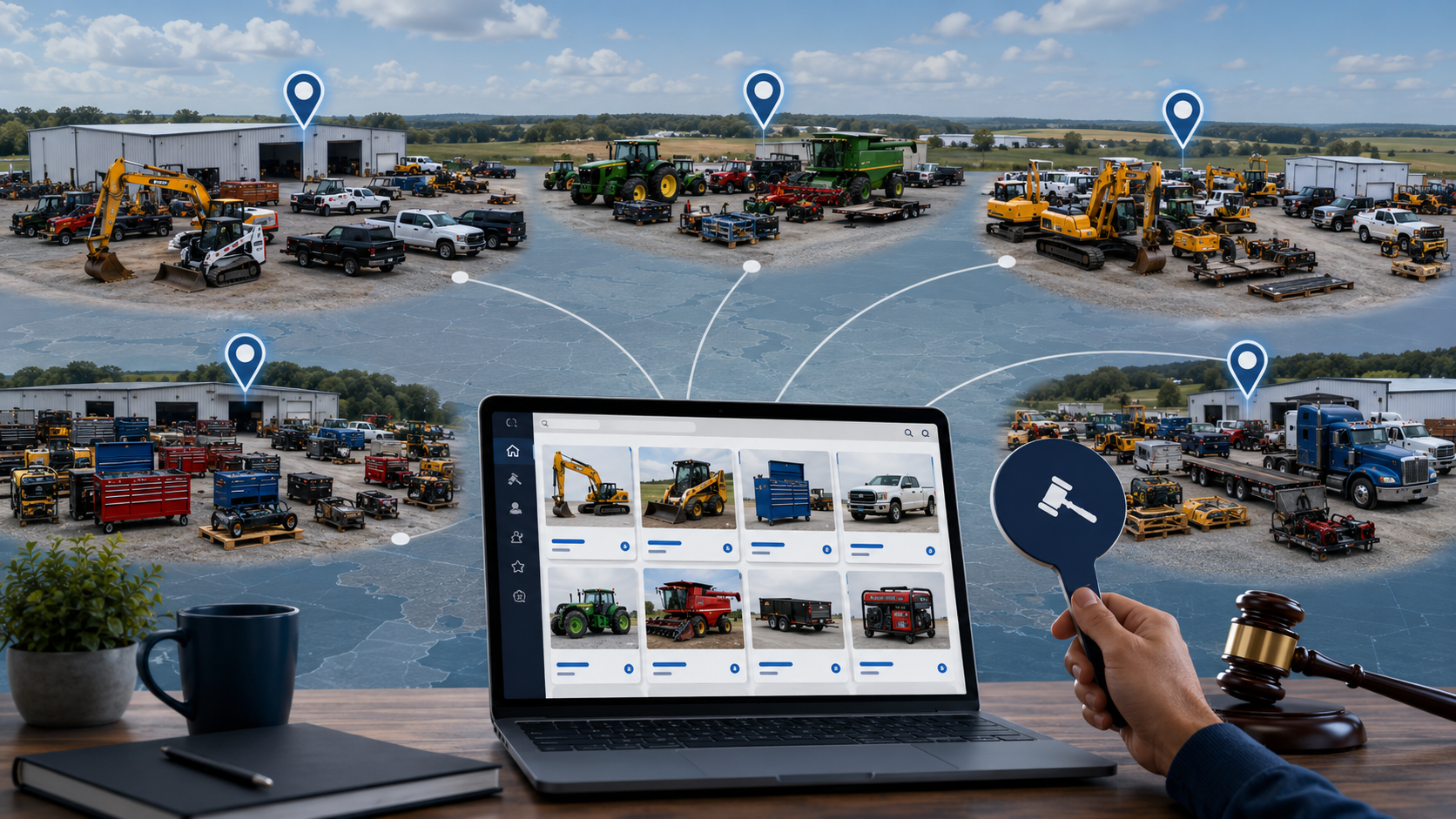
- You're in a specialized vertical — farmland, vehicles, government surplus, industrial equipment — where the nuances of your market require purpose-built functionality
If you're not sure which path fits, that's a normal place to start. We can usually help you figure it out in a single conversation.

 Daniel P. West
 Daniel P. West : July 20, 2026
.png)